Set aside 35–45 minutes for this route. It connects three nearby sites tied to Yale’s history of slavery and commemoration: Grace Hopper College on Elm Street, Harkness Tower, and Connecticut Hall on Old Campus. Rather than showing a single campus policy, these places let you compare three distinct actions side by side: a residential-college name was changed, a figure of Calhoun remains within an older sculptural program, and archival research now adds details about enslaved labor to a building whose facade does not tell that story.
John C. Calhoun, a South Carolina politician from the Yale Class of 1804, was a prominent defender of slavery and white supremacy. Yale originally attached his name to a residential college, but in 2017 the university replaced it with the name of Grace Murray Hopper. Comparing that change with other spots on campus where older commemorative work still stands helps put the renaming in context.
One: renaming Calhoun College as Grace Hopper College
Stand on the public sidewalk along Elm Street and look toward the gateway of the college. Brick walls, stone trim, pointed arches, and narrow windows form a 1930s Collegiate Gothic residential building. Nothing about the physical structure had to be rebuilt for the complex to adopt a new identity; today, the name above and around the entry directs attention to Grace Hopper instead.
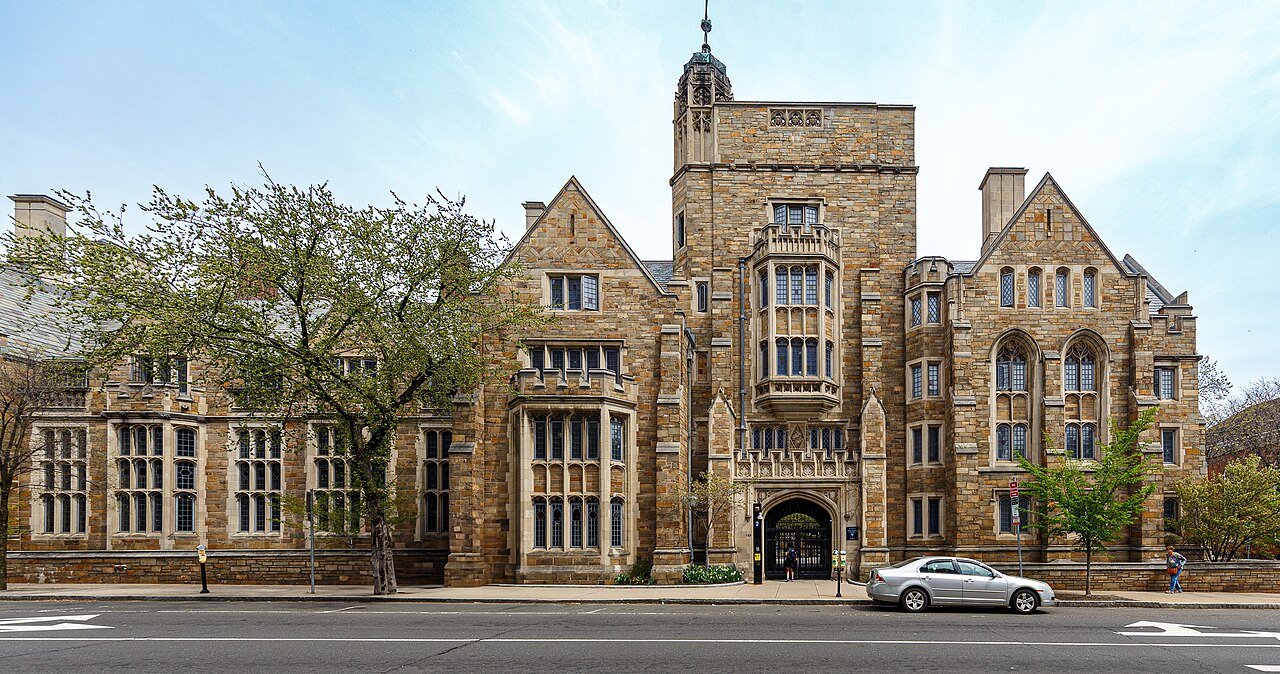
Yale announced the change in February 2017. The university’s official news release records the decision of the Yale Corporation and identifies Hopper as a Yale graduate, computer scientist, and naval officer. In an accompanying statement, President Peter Salovey argued that Calhoun’s principal legacy as a champion of slavery and white supremacy conflicted with Yale’s mission and values.
That decision applied a specific set of renaming guidelines. The principles asked whether a namesake’s principal legacy conflicts with the university’s mission, whether that legacy was contested during the person’s lifetime, why Yale originally honored the person, and whether the named location plays a substantial role in forming community life. Because the framework began with a strong presumption against renaming, the 2017 decision stood out as an exception rather than a mandate that every troubling name should automatically be removed.
Choosing Hopper opened a different commemorative direction, highlighting achievements in science, education, and military service rather than Calhoun’s political career. Avoid framing her simply as an ideological opposite selected to “cancel” Calhoun. While Yale’s documentation explains the significance of both names, it does not support a claim that the two biographies were designed as perfectly symmetrical symbols.
Two: the Calhoun figure within Harkness Tower's Eight Worthies
Walk east toward Harkness Tower and observe its lower sculptural decoration from a publicly accessible spot. The decorative scheme includes a set of sculpted figures crafted by Lee Lawrie. Professional documentation, including SAH Archipedia, identifies a group known as Yale’s Eight Worthies and includes John C. Calhoun among them.
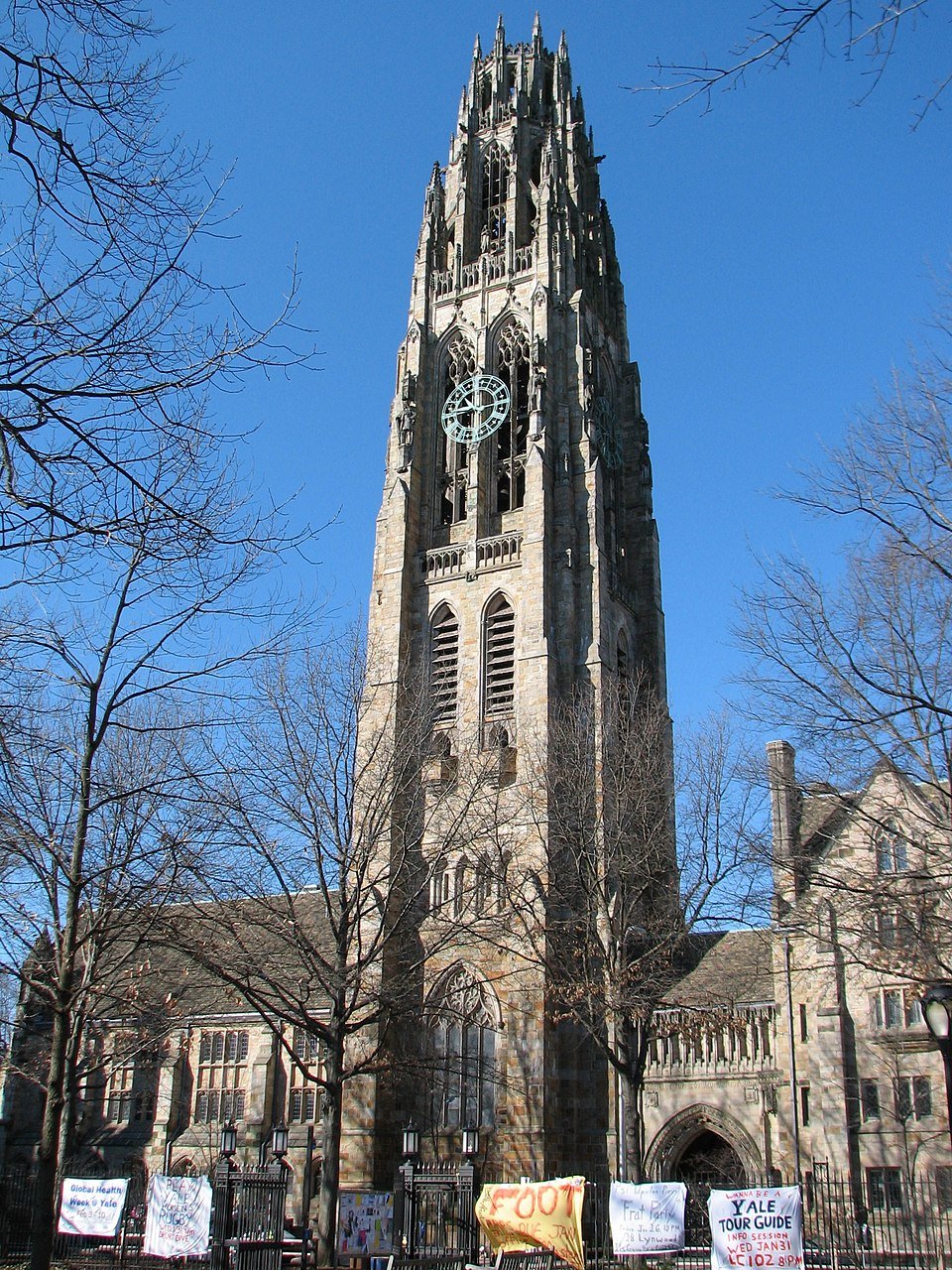
Do not expect an overall photograph of the tower—or every viewing angle on site—to let you identify Calhoun right away. Light, distance, and the density of carved figures make the program difficult to read without a guide. That visual difficulty is itself relevant: a changed building name is obvious to a passerby, while an inherited sculptural reference may remain invisible unless someone supplies context.
Salovey’s renaming statement used the phrase “confronting, not erasing history.” The continued presence of the Harkness program can be placed beside that principle, but the sources in this pack do not establish that Yale made a separate, documented decision to retain this specific figure as the official implementation of that phrase. Keep that distinction clear. What the site demonstrates is coexistence: the residential college name changed, while Calhoun still appears within a 1920s memorial scheme elsewhere on campus.
The group also records an earlier act of selection. Eight people were carved onto a prominent tower because Yale’s patrons and designers once treated them as worthy representatives of institutional history. Looking at the full program asks two questions at once: whom did an earlier Yale honor, and how legible is that choice to visitors now?
Three: adding archival evidence at Connecticut Hall
Continue south into Old Campus to find Connecticut Hall. Built in 1753, it is Yale’s oldest surviving campus building. Its red-brick, symmetrical facade can tell you about period construction and design, but it does not identify the workers who made it.
The Yale and Slavery Research Project adds that missing layer through archival research paired with an app-guided walking tour. Yale’s public account of the tour identifies nineteen points of interest with text, audio, images, and documents. Connecticut Hall is one of those stops.
The Yale article on the walking tour reports that records from President Thomas Clap identify at least five enslaved men who worked on Connecticut Hall, including one enslaved by Clap. The project further states that Black workers—almost all enslaved and unpaid—worked at least 672 days on the building. Keep both the scope and attribution of those claims clear. “At least five” is a record of identified individuals rather than a complete workforce count, and “672 days” is the project’s documented minimum rather than a measure of all labor required to construct the hall.
This method changes interpretation rather than masonry. A digital tour can add documents as research develops and connect several sites in one route. It also has limits: it requires a phone, current software, connectivity, and a visitor who chooses to open it. Do not invent a physical plaque at each stop; the official material establishes an app-guided stop, not a uniform set of markers.
Three actions, three media
Place the three sites on one mental map. At Hopper College, a name attached to a community was replaced. At Harkness Tower, an older sculptural program remains and may require contextual help to be recognized. At Connecticut Hall, a research project overlays archival evidence about enslaved labor onto a building that remains physically familiar.
These actions work through different media. A name is highly visible and relatively concise. A carved figure is durable but easy to overlook within a larger facade. A digital archive can be detailed and updated, but only if visitors seek it out. None of the three alone resolves Yale’s relationship to slavery. Together they show how commemoration and historical responsibility are distributed across naming, inherited fabric, and research.
Access also differs. Hopper College is a residential community, and Connecticut Hall has active uses and changing renovation conditions. The essential observations can be made from public routes and the tour app. Follow current Yale access rules; do not assume interiors are open.
Five questions to take into the field
- At Grace Hopper College, can the facade itself reveal that the building once carried another name?
- On the walk to Harkness Tower, how many names and figures require prior knowledge before they become meaningful?
- At the tower, can you locate the Eight Worthies program, and what prevents an easy identification of Calhoun?
- At Connecticut Hall, what can the brick facade tell you about the building, and what can it never tell you about its workforce without archives?
- Which medium—name, carved figure, or digital tour—reaches a casual visitor most easily, and which can carry the most historical detail?